|
| 商品編號: | DCD4716 | |
| 商品名稱: | The Diamond Sutra Explained 出版公司:白象文化事業 作者:南懷瑾 類型:哲學宗教-東方哲學 PDF電子書 英文版 | | | 語系版本: | 英文版 | |
| 運行平台: | PDF電子書,沒有任何平台限制,終身使用 | |
| 更新日期: | 2025-09-01 | |
| 光碟片數: | 1片CD光碟 | |
| 銷售價格: | $100元 | |
| 熱門標籤: | 白象文化事業
南懷瑾
東方哲學
Diamond
Sutra
Explained
| |
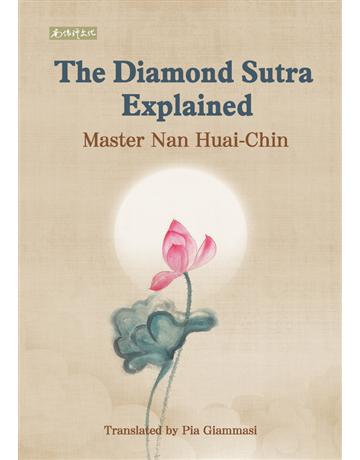
The Diamond Sutra Explained 出版公司:白象文化事業 作者:南懷瑾 類型:哲學宗教-東方哲學 PDF電子書 英文版
商品資料
作者:南懷瑾
出版社:白象文化事業有限公司
出版日期:2022-10-01
課程類型:哲學宗教>東方哲學
ISBN/ISSN:9789860613070
內容簡介
Diamond Sutra Explained
Master Nan Huai-Chin’s discourses on the treasured Buddhist Diamond Sutra bring together a lifetime of personal cultivation experience which ran the gamut of esoteric and spiritual practices. This beautiful Sutra can be a compass and a gauge when journeying towards understanding our true selves.? Master Nan guides us through the Diamond Sutra providing students with a framework that combines understanding with practical cultivation.? Master Nan’s teachings are unique among contemporary and historical interpretations.??
作者簡介: Master Nan is considered one of the greatest contemporary spiritual Masters. Born in China in 1918, Master Nan's profound understanding of the Dharma was verified by several Chan and esoteric Buddhist Masters. He is considered a foremost expert in Buddhism, Taoism, Confucianism, Chinese philosophy, history and other aspects of Chinese culture. He is the author of over 80 books that have sold over a billion copies in Chinese-speaking countries.
Everything changed when Pia Giammasi met Master Nan in Hong Kong in 1988. Her world turned upside-down, inside out, and expanded exponentially by being enveloped into the enlightened reality of Master Nan. Pia had the privilege of doing oral translation for Master Nan for nearly 30 years and is currently working on written translations of his books.
章節試閱
SECTION 1
REASON FOR THE TEACHING
Thus have I heard. At one time the Buddha was sojourning in the Kingdom of Sravasti, staying at Anathapindika's Park in the Grove of Jeta together with an assembly of twelve hundred and fifty bhiksus. As it was time to eat, the World-Honored One put on His robe, picked up His bowl and made His way into the great city of Sravasti where He begged for His food from door to door. This done, He returned to His retreat and took His meal. When He had finished, He put away His robe and bowl, washed His feet, arranged His seat and sat down.
Perfectly Ordinary
If we were to recite the Diamond Sutra according to the traditional way of reciting Buddhist scriptures, we would need to beat the wooden fish in time with each word—du, du, du—and just recite it through to the end. The wooden fish is not meant to be banged upon arbitrarily! Why must we beat the wooden fish? The wood is carved into the shape of a fish so as to remind us that in seeking the Tao, walking amongst men or in any situation of learning, we must be as diligent as fish. Fish have their eyes open day and night. For them, to stop and remain motionless for a while is considered sleeping. In the temples, we beat the wooden fish so as to remind ourselves to be diligent in our cultivation night and day, like fish, which are always alert.
The teaching of every sutra had different causes and conditions precipitating it. When the Buddha taught the Surangama Sutra, for example, the opening was different. After the Buddha had eaten, he saw that his cousin Ananda was having trouble in the city. Once again problems come up after eating, people start eating and all these problems arise—maybe people shouldn't eat. The Buddha immediately displays super powers to help Ananda. From the crown of his head, out shoots beams of light, big beams of light! Then a transformation body emanates forth and calls on Manjushri, to whom is transmitted a special mantra which enables him to quickly rescue Ananda and bring him back. If this was turned into a movie, it would be very exciting but hard to make. Each sutra has such an opening, but the Diamond Sutra is unique in that there is no beaming forth of light from the crown, or from the point between the eyebrows or from the infinity symbol on the Buddha's chest, and so forth. The Diamond Sutra simply begins with the Buddha taking his meal; but, we must realize that eating is actually not such an easy affair. In Beijing's White Cloud Taoist Temple, there hangs a famous couplet written during the Ming Dynasty, "In this world, nothing compares to seeking the Tao; Under the heavens, nothing's more difficult than eating one's fill." In this world, the best thing to do is seek the Tao; under the heavens, nothing is more difficult than eating. Filling the stomach is the most difficult task in the world.
Ordinarily, we tend to think that Buddhas must walk along elevated three inches above the ground, stepping on lotus pads after which they then go soaring off into the sky. But the Buddha of this sutra is actually the same as us, eating, wearing clothes, begging, walking barefoot with the soles of his feet making contact with the mud. So, when Buddha returned from the city, He would wash his feet, eat His food and sit down to meditate. This tells us that the ordinary is Tao and the most mundane is the most exalted. In other words, true reality is found within the commonplace and the real heavenly realm of the Buddhas and saints is found within ordinary life. When one has truly perfected human wisdom, then simultaneously, the supramundane or heavenly wisdom is also perfected.
I hope the young people here will take to heart the spirit and the example set by the Buddha in the opening of the Diamond Sutra.
以上內容節錄自《The Diamond Sutra Explained》南懷瑾著,Pia Giammasi譯◎著.南懷瑾文化事業有限公司出版
更多精彩內容請見:
http://www.pressstore.com.tw/freereading/9789860613070.pdf
作者序
Personal Note
I first met Master Nan in March of 1989 in Hong Kong. It was my great fortune to be living on the same street as he was and a Buddhist nun, Ven. Hong Ren, arranged for me to meet him.. Master Nan can be described as a distinguished looking Chinese gentleman with a petite frame and strong features. He usually wears a dark blue, traditional long Chinese long gown or “chang pao" for men, and on his feet you can usually find a pair of cloth kung fu slippers. There is always a cup of hot Oolong tea, bowl of salted peanuts and a tiny folded wet towel for finger wiping on the table next to his chair – the chair in which only Master Nan sits! As to the quality of Master Nan’s voice, it is something very special. It has many moods - sometimes calm and smooth like a lake, sometimes like a babbling stream and sometimes like the roaring ocean. In any case, the sound of his voice is deep and sonorous.
In my first conversation with Master Nan, he asked me if I was having any difficulty in my meditation practice. I told him that thoughts would often disturb my mental quiet. Master Nan then asked me where the thoughts came from and I looked and saw that thoughts come out of nowhere. I told this to Master Nan and he asked me where the thoughts went after they left. Again I looked inside and saw that they simply disappeared back into nowhere. After reporting this finding, Master Nan looked me straight in the eye and said, “Right, so don’t worry about them.”
After meeting him, during that period of time, I would go every evening to his house where he would give teachings. At that time my Chinese was very poor, but somehow he was able to communicate much to me and the other students did their best to help me understand his teachings. Over the weeks and months, Master Nan gently poked holes into my ideas of what Buddhism, spiritual cultivation and enlightenment were all about, and pushed open my mental walls of limitations. He taught me to stop grasping at thoughts. It is difficult to put into words all that I have learned from Master Nan. The wisdom of his teachings continually unfolds within my life. For example, he taught me to see things for what they are - to unwrap things from their cultural packaging or from my preconceived notions and prejudices and most importantly, to distinguish the appearance of something from its essence and function.
Master Nan always encouraged his students to be clear on the role that they play in life. Many problems occur because people are not clear about the role that they?ought to be playing. If one wants to be a lay practitioner, then one must balance?one's responsibility to work and family with one’s commitment to practice. One must learn how to include one’s work and family in one’s spiritual practice. If one has a calling to live a monastic life and one’s conditions allow for one to do so, then one should put all their effort into living the true spirit of a monastic. Since I have played many roles, this teaching has been important and helpful in aligning my energy in relation to the priorities each role demands.
Master Nan sets an incredible example having played each of the roles in his life with great wisdom and compassion. He has gone from riches to rags to riches many times in his life and whether he be rich or poor, Master Nan is always generous to the extent of his means. He has a magnanimous heart and spends?all of his time, energy and money helping people any way he can. Master Nan treats his students like his own children, caring for their health and well being as well as their spiritual progress. Although Master Nan plays all roles to his best, he is not attached to any of them and so there is always a light, playfulness in all of his actions. Thus he teaches us to be serious about what we do but to not take ourselves too seriously.
Over the years, I have had the opportunity to listen to many of Master Nan’s lectures and teachings and to read his books. Master Nan always placed great importance on the Diamond Sutra, as did many Chan/Zen masters throughout the ages. At the time I decided to translate this commentary, there were not many translations of the Diamond Sutra in English. The ones that were available had many discrepancies among them and I thought that by translating Master Nan’s commentary on the Diamond Sutra, it would help to bring about a more insightful translation of the original text.
I do not expect that my work will in any way be the final translation of the Diamond Sutra but I do hope that this commentary will provide a useful tool which will help future generations in their spiritual cultivation. It is up to these generations to achieve higher levels of spiritual attainment and verify the quality of this translation based on their personal experience. Having been a student of Master Nan for many years, I did my best to retain the flavor and the feeling of his teaching in the translation and to balance cultural originality with ‘understandability’. I hope that the reader will forgive me for any faults in the translation and I must take consolation in knowing that no matter how hard you try, nothing will ever be perfect!
Pia Giammasi
|


 您現在的位置:
 電子書綜合教學

