|
| 商品編號: | DCE5107 | |
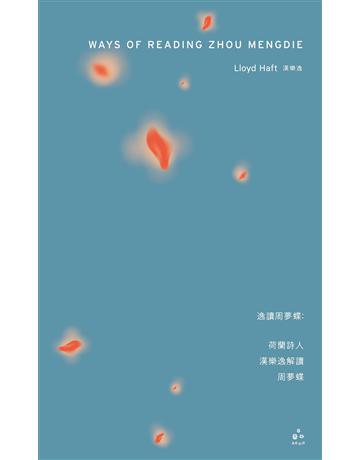
| 商品名稱: | WAYS OF READING ZHOU MENGDIE 出版公司:漫遊者文化 作者:漢樂逸(Lloyd Haft) 類型:華文文學-現代詩 EPUB電子書 英文版 | | | 語系版本: | 英文版 | |
| 運行平台: | EPUB電子書,沒有任何平台限制,終身使用 | |
| 更新日期: | 2025-09-01 | |
| 光碟片數: | 1片CD光碟 | |
| 銷售價格: | $100元 | |
| 熱門標籤: | 漫遊者文化
漢樂逸
現代詩
ZHOU
MENGDIE
Lloyd
Haft
| |
WAYS OF READING ZHOU MENGDIE 出版公司:漫遊者文化 作者:漢樂逸(Lloyd Haft) 類型:華文文學-現代詩 EPUB電子書 英文版
商品資料
作者:漢樂逸(Lloyd Haft)
出版社:漫遊者文化
出版日期:2022-09-05
課程類型:華文文學>現代詩
ISBN/ISSN:
內容簡介
本書是《逸讀周夢蝶──荷蘭詩人漢樂逸解讀周夢蝶》的英文版原著,由詩人暨漢學家漢樂逸以詩人、翻譯者、讀者、文學研究者身分,精采剖析周夢蝶詩作,並透過文學、美學、哲學、心理學、現象學、神學等不同面向,來琢磨、推敲周詩,走進周夢蝶創作世界的豐富意涵,讀出周詩所具有的宇宙性或人性特質,以及詩作中引發的「個人與心靈的自由」。
This is the most extensive introduction in English to the metaphysical poet Zhou Mengdie (aka Chou Meng-tieh, 1921-2014), who lived much of his life in Taiwan and wrote in Chinese. It is a companion volume to Zhou Mengdie: 41 Poems which presents many of Zhou’s most meditative poems in the original and in full translation, but can be read independently. This book shows how different reading strategies can help us to discern many-layered possible meanings in Zhou Mengdie’s dense but rewarding poetry.
The first part, ‘Reading Zhou Mengdie,’ goes beyond the traditional labeling of Zhou as a ‘Buddhist’ poet. Discussing many examples in translation, Lloyd Haft shows that interpretation via formalist literary theory, Freudian dream psychology, or Husserlian phenomenology can be just as revealing. The second part, ‘On Translating Zhou Mengdie,’ demonstrates the surprising ways in which the translation process itself can be a fruitful key to parallel or alternative meanings.作者簡介: ABOUT THE AUTHOR:
Lloyd Haft (1946-) grew up in the USA and graduated from Harvard. Starting with graduate studies in Chinese at Leiden University, he has lived in The Netherlands since 1968, but he has also spent some ten years in the Far East, mostly in Taiwan with his wife the ceramist Katie Su. For many years he taught Chinese language and literature at Leiden. He has published ten volumes of original poetry in Dutch, including a free-verse rewriting of the Psalms which won the 2004 Ida Gerhardt Prize. His scholarly publications include Pien Chih-lin: A Study in Modern Chinese Poetry and (with Wilt Idema) A Guide to Chinese Literature. His translations include Herman Gorter: Selected Poems.
漢樂逸(Lloyd Haft)
1946年出生於美國威斯康辛州希博伊根市,青少年時期居住過威斯康辛、路易斯安那、堪薩斯等州。1968年從哈佛大學畢業後前往荷蘭萊頓大學中文系研修,於1973年獲碩士學位,1981年獲博士學位。從1973至2004年在萊頓大學教授中國語言及文學,多半是詩歌。他的漢學著作包含《發現卞之琳:一位西方學者的探索之旅》(Pien Chih-lin : A Study in Modern Chinese Poetry,1983年英文版,2010年中譯版)、《中國文學導讀》(A Guide to Chinese Literature,與荷蘭著名學者伊維德Wilt Idema教授合著,1997)、《周夢蝶與意識詩》(Zhou Mengdie’s Poetry of Consciousness, 2006),近年的漢學出版則是以現代荷語自由解讀道德經的《老子多道新繹》(Lau-tze's vele wegen,2017)。
他廣泛英譯荷蘭詩人赫爾曼.郝德(Herman Gorter)的詩,以及包含鄭敏、洛夫、羊令野、卞之琳和周夢蝶等不同詩人的中文詩。從1980年代起,即以詩人身分撰寫荷語詩及英詩。他的雙語詩集《西洋沉島》(Atlantis),獲得1994年荷蘭Jan Campert文學獎,依據荷語舊約聖詠自由解讀的詩集《漢氏聖詠》(De Psalmen),獲荷蘭2004年 Ida Gerhardt詩歌獎(2011年由Uitgeverij Vesuvius 出版社再版)。他2018年出版的荷語詩集《入堂誦》(Intocht),可以經由荷蘭海牙美國圖書中心網路隨需印刷(American Book Center POD)。
漢樂逸於2004年提早退休後,多半時間與曾任職文化部傳藝中心台灣音樂館主任兼台灣豫劇團團長的太太蘇桂枝一起在臺灣。2019年6月,他榮獲國立臺灣師範大學傑出校友。除了寫作與翻譯之外,他的興趣還包含太極、即興鋼琴演奏、星象學,以及步行。
作者序
PREFACE
This book brings together a number of prose pieces that I wrote at widely separated times between 2002 and the present year. It is a companion volume to Zhou Mengdie: 41 Poems, which comprises 41 poems by Zhou Mengdie (ZMD) in the original and in my English translations. In the preface to that book, I have outlined the development of my personal and professional interest in Zhou Mengdie, which goes back to 1971. The present book can be read independently, as all passages to be discussed are included in the original and in translation. This book is not intended as a general introduction to ZMD. It describes and gives examples of my personal reading strategies in the hope that readers may find them useful.
During the years when I taught courses on modern Chinese poetry at Leiden University in the Netherlands – from the 1970s until 2004 – I discussed Zhou Mengdie’s poetry with my students and translated some of his poems into both English and Dutch. I first published ten English translations in 2001 in the anthology Frontier Taiwan 二十世?台灣詩選 edited by N.G.D. Malmqvist 馬?然 and Michelle Yeh 奚密. The translations were well received. In the following couple of years, lecturing on ZMD at European universities – Prague and Bochum – I first started to systematize the reading strategies that worked well for me as approaches to ZMD’s dense and unusual poetry. In 2004, while on a research grant from the Center for Chinese Studies in Taipei, I further developed these ideas and made new translations. Together with my papers from Bochum and Prague, the results were published in 2006 in monograph form as Zhou Mengdie’s Poetry of Consciousness 周夢蝶與意識詩. That book, which I have slightly edited and re-titled Reading Zhou Mengdie 解讀周夢蝶, is one of two original publications that have now gone into the present collection.
The second is “‘Branchings of My Hands’: Translation as a Key to Parallel Meanings in Zhou Mengdie’s Poetry.” It began as a paper that I presented at an international conference on Zhou Mengdie held at National Taiwan University in March 2013. I slightly rewrote it and posted it on my blog in three instalments in September 2013. For inclusion in the present book I have re-titled it On Translating Zhou Mengdie.
The various pieces dating from 2006 and 2013 have two things in common. (1) They both stress that ZMD’s poetry is best approached by keeping various possible dimensions of meaning in mind at the same time. (2) They both focus strongly on the formal aspects of poetry. The first of these, the multi-level approach, means that rather than just pigeonholing ZMD as a ‘Buddhist’ poet, we should see what other keys besides Buddhism may fruitfully apply. In 2006, in discussing his thematics, I used a three-pronged approach (individual-collective-metaphysical). In 2013, focusing more on the language itself, I used the concept of a language ‘ambience’ which could be Public, Scriptural, or Existential.
As for the second point in common between “2006” and “2013” – the stress on the formal aspects of poems rather than on situating them within any historical or cultural context – this is a matter of my personal taste in literary analysis. My own interest in poetry developed during the 1970s and 1980s. In the beginning I was most drawn to Anglo-American Imagism (which in turn had been influenced by translations from classical Chinese poetry). Among methods of literary criticism, I have always most favored the so-called New Criticism, with its ‘close reading’ of individual texts, and Russian Formalism which similarly brings out meaning by examining identifiable linguistic features within the actual text. During the course of my career, newer and more complicated critical theories came out and were in vogue for a while, but I could not see that they were as useful for my purposes as the approaches I was already following.
I am not a Buddhist, but as a young graduate student fifty years ago, like many other European and American young people of my generation I was interested in Zen and read introductory books about it by writers like Alan Watts, Edward Conze, and D.T. Suzuki . My circle of friends in Holland included several believers in Theosophy, whose philosophy includes many Buddhist concepts. ‘Oriental’ ideas like karma and reincarnation were frequent topics of conversation. I am sure that present-day readers all over the world will be familiar enough with these concepts not to need special elucidation.
Of the pieces reprinted in this volume, undoubtedly “2013” is the most radical or experimental. It pursues ‘close reading’ to a level at which sometimes the individual words almost become independent. I believe this is legitimate as one possible approach among others. “2006” reads ZMD’s poems in frames of reference that may be initially unfamiliar to the average reader – formalist literary theory, Freudian dream psychology, and phenomenology. I have tried not to spend much space introducing these concepts separately, but rather to explain them while concretely demonstrating their applicability to ZMD’s poems. Parts of “2006” were written nearly twenty years ago, but I still stand by what I wrote at that time and have not made major revisions for this present edition.
All parts of this book were originally written in English and have been translated into Chinese for the Chinese edition. In Dorothea Tung (董恒秀), I was fortunate to find a translator who was adequate to this far-from-easy task. I have learned some Chinese vocabulary from studying the elegant solutions she has found!
I also wish to thank my partner Dr. Katie Su for her help with my ‘close reading’ of many a text, Deila Huang for advice on Chinese grammatical and linguistic terminology, and Professor Alvin Dahn for suggestions on philosophical nuances. Finally, this will be an appropriate place to thank my mother, who first introduced me to Freudian theory and to psychology in general, and my father, who gave me the idea that following my own road in life was the right thing to do.
Lloyd Haft
Neihu, Taipei
June 2021
目錄
PREFACE
PART I. READING ZHOU MENGDIE
By Way of Introduction
Prelude
Chapter 1: ‘All Poems are Palindromes’: Chiasmus and Other Symmetry Structures
Chapter 2: Poems, Dreams, and Dream-Poems
Chapter 3: Body and Consciousness
Chapter 4: What World Do I Call You ‘We’ In (or, How Other is the Other Shore?)
Bibliography
PART II. ON TRANSLATING ZHOU MENGDIE
1. Levels of implication: ‘Ambiences’
2. Lines that end, or don’t
3. Reading word by word
4. Imaginary words that mean the most
5. Puns, obvious and arcane
6. What is what it says saying?
7. Who shall say?
8. The only thing...
List of Works Consulted/Cited
|


 您現在的位置:
 電子書綜合教學

