|
| 商品編號: | DCF1503 | |
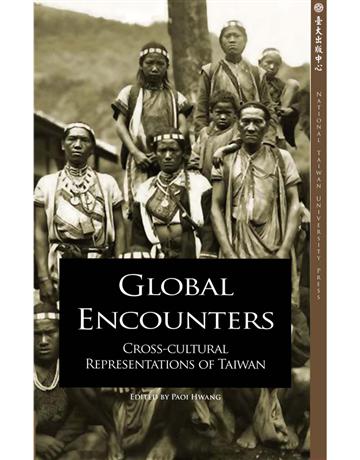
| 商品名稱: | Global Encounters:Cross-cultural Representations of Taiwan 出版公司:國立臺灣大學出版中心 作者:Jeremy Fernando、Timothy R. Fox、Bennett Yu-Hsiang Fu、Paoi Hwang、Lim Lee Ching、Terence Russell、Chih-ming Wang、John Wu、Jr.、Isaac Yue 類型:歷史地理-台灣研究 PDF電子書 英文版 | |
| 運行平台: | PDF電子書,沒有任何平台限制,終身使用 | |
| 更新日期: | 2025-09-01 | |
| 光碟片數: | 1片CD光碟 | |
| 銷售價格: | $100元 | |
Global Encounters:Cross-cultural Representations of Taiwan 出版公司:國立臺灣大學出版中心 作者:Jeremy Fernando、Timothy R. Fox、Bennett Yu-Hsiang Fu、Paoi Hwang、Lim Lee Ching、Terence Russell、Chih-ming Wang、John Wu、Jr.、Isaac Yue 類型:歷史地理-台灣研究 PDF電子書 英文版
商品資料
作者:Jeremy Fernando、Timothy R. Fox、Bennett Yu-Hsiang Fu、Paoi Hwang、Lim Lee Ching、Terence Russell、Chih-ming Wang、John Wu、Jr.、Isaac Yue
出版社:國立臺灣大學出版中心
出版日期:2013-01-25
課程類型:歷史地理>台灣研究
ISBN/ISSN:9789860354133
內容簡介
Taiwan’s status as an island surrounded by powerful nation states has forced upon it a history of permeable borders and an ever fluctuating cultural subjectivity. Originally inhabited by Austronesian tribal peoples, the island has over the centuries fallen under the political, economic, and cultural influences of the Spanish, Dutch, Japanese, and Chinese occupiers. Globalization has further transformed and complicated Taiwan’s vistas of political reforms, cultural productions, and ethnic re-composition. Such gradual but radical transformation has, in countless ways, encouraged the nation-state identity and identification to vacillate between insularism and globalization. This collection is an example of the multitude of voices that speak for Taiwan. These selected essays, contributed by scholars from different countries (Canada, Hong Kong, Singapore, Taiwan, UK, and USA), engage with the debates on Taiwan’s identity and nationhood while also attempting to step beyond the nationalistic frame. Whereas the openness to new ideas may alter our perspectives, this collection reminds us to embrace external influences without forgetting to celebrate our unbroken, unique historical legacy.作者簡介: Jeremy Fernando, Timothy R. Fox, Bennett Yu-Hsiang Fu, Paoi Hwang, Lim Lee Ching, Terence Russell, Chih-ming Wang, John Wu, Jr., Isaac Yue
章節試閱
書摘1
Transcending Intellectual Boundaries: The Lyrical Phenomena of Fang Wen Shan (excerpt)
Lim Lee Ching
As a cultural and political entity, the Taiwanese story is one whose narrative is constructed by a central paradox—one that is immediately schismatic and simultaneously bound by its relationship with Mainland China. To the extent that even in the realm of domestic, municipal politics, the Taiwanese public consciousness is held in persistent suspension over its relationship with the Mainland—cast as it often is in absolute terms—it might be possible to suggest that a popular cultural gesture has as much potential to unify this collective psyche as to divide it. And, in many ways, the history of Chinese popular music can be seen to perform this strange paradox as an enactment of the history of Taiwan itself. Of the three primary channels of popular culture, it is popular music that best conveys the identifiable aspects of Chinese culture and acts as a conduit for its diaspora. It can also be kept on a kind of parity with—though not necessarily counter to—the globalized influence of established Western, Anglophone popular culture. The nature of the popular musical form lends itself best to transmission on any scale, especially in an age of digital reproductivity. This involves even appropriating the visual media, such as television, film, music, and karaoke videos, for an even more comprehensive trajectory of transmission. By its form, I mean here the system of construction, compactness, accessibility, (relative) ease of production, and consumption. Since it is reliant on the lyrical form for quick comprehensibility, popular music is in many ways also the most immediately literary among the popular arts—although the level at which such literary appeal engages the consumer can be debatable.
書摘2
Transcending Intellectual Boundaries: The Lyrical Phenomena of Fang Wen Shan (excerpt)
Lim Lee Ching
As a cultural and political entity, the Taiwanese story is one whose narrative is constructed by a central paradox—one that is immediately schismatic and simultaneously bound by its relationship with Mainland China. To the extent that even in the realm of domestic, municipal politics, the Taiwanese public consciousness is held in persistent suspension over its relationship with the Mainland—cast as it often is in absolute terms—it might be possible to suggest that a popular cultural gesture has as much potential to unify this collective psyche as to divide it. And, in many ways, the history of Chinese popular music can be seen to perform this strange paradox as an enactment of the history of Taiwan itself. Of the three primary channels of popular culture, it is popular music that best conveys the identifiable aspects of Chinese culture and acts as a conduit for its diaspora. It can also be kept on a kind of parity with—though not necessarily counter to—the globalized influence of established Western, Anglophone popular culture. The nature of the popular musical form lends itself best to transmission on any scale, especially in an age of digital reproductivity. This involves even appropriating the visual media, such as television, film, music, and karaoke videos, for an even more comprehensive trajectory of transmission. By its form, I mean here the system of construction, compactness, accessibility, (relative) ease of production, and consumption. Since it is reliant on the lyrical form for quick comprehensibility, popular music is in many ways also the most immediately literary among the popular arts—although the level at which such literary appeal engages the consumer can be debatable.
作者序
This collection engages with the political debates on Taiwan’s identity and nationhood while also attempting to step beyond them. The first three essays focus on aboriginal culture and literature because a major development in the preserving and revising of Taiwan’s culture has centered on aboriginal people and their rights. When the Chinese Nationalists arrived in Taiwan at the close of the Chinese Civil War, they promoted an ideology that not only sought to overturn the previous Japanese nationalism but also strove to suppress the Taiwanese native and indigenous presence. One approach toward this goal was forced name changing. Just as the Japanese colonial authorities had called upon name changing as a form of assimilation, so too the Nationalist regime made it compulsory for tribal people to adopt Chinese names. Under the leadership of Yi-chiang Pa-lu-erh, the Alliance of Taiwanese Aborigines pushed for democratization in requesting “the right to self-government, [and] determining the course of their own affairs in all matters except foreign policy and defence.” Terence Russell’s “The Voyage of the Sandeq Explorer: A Taiwanese Adventure in the Austronesian World” uses Anthony D. Smith’s argument on ethnicity to establish the Austronesians as having the earliest and most legitimate claim to Taiwan, but he also points out that allusions to such a heritage can obscure Taiwan’s push for nationhood insofar as the Austronesian identity is shared by many countries in the Pacific. Timothy Fox’s “Tribal Gothic: Supernatural Images of Resurrection and Insurrection in Taiwanese Aboriginal and New Zealand Maori Writing” further explores this Austronesian connection between aboriginal writing in Taiwan and New Zealand. By looking at supernatural elements in both cultures in relation to the Western Gothic tradition, Fox is able to demonstrate that a nation’s indigenous tribal presence is vital to the formation of its identity. Bennett Yu-hsiang Fu’s “Where Is Her(e): Metissage as Indigenous Intervention in Taiwanese Liglav A-Wu’s Who Will Wear the Beautiful Garments I Weave? and Canadian Lee Maracle’s I Am Woman: A Native Perspective on Sociology and Feminism” takes the importance of indigeneity one step further. Fu argues that it is inevitable for cultures to mix and merge over time; thus, it is the metissage that allows marginalized groups like the aboriginal people of Taiwan and Canada to form a common solidarity to overturn hegemonic discourses and policies.
The martial law that sought to suppress the Taiwanese spirit not only affected the aborigines but also the majority of Taiwan’s inhabitants who saw themselves as “Taiwanese.” The second set of essays provides closer analyses of colonization and its effects on Taiwan. Chih-ming Wang’s “Risky Fiction: Betrayal and Romance in The Jing Affair” is based on a novel that fictionalizes the politics in Taiwan in the 1960s. The Jing Affair is written by an American government official who fantasizes about Taiwanese revolution and the Chinese Nationalist government’s betrayal of its American ally. Paoi Hwang’s “Heart of Madness: Identity Crisis and Cultural Conflicts in the Colonial World” is a more factual analysis of how colonization can lead to madness in both the individual and the nation. Hwang’s essay compares the works of seminal writers like Joseph Conrad, Chinua Achebe and Wu Zhuoliu to theorize on the damage of cultural conflicts under colonial rule and the impact it has on nation and identity formation. Isaac Yue’s “Alienation, Marginality, and the Re-Imagination of Cultural Identity: The Impact of Colonialism and Shi Shuqing’s Defamiliarization of Taiwan and Hong Kong” examines the advantages and disadvantages of cultural defamiliarization and alienation. Yue uses the works of Taiwanese author Shi Shuqing to examine the literary constitution of Hong Kong. He concludes that while colonization may adversely affect the individual, the resulting “deformity” may survive and thrive if turned to good use.
The final three essays uses alternative approaches to explore Taiwan in relation to the world. Lim Lee Ching’s“Transcending Intellectual Boundaries: The Lyrical Phenomena of Fang Wenshan” examines music as an alternative cultural space. He believes the global appeal of Taiwanese pop music comes from its multifarious influences; it has a voice that speaks of various historical and cultural ties. As a true global entity, Fang’s music experiments with the unfamiliar and yet is nostalgic and not forgetful or resentful of its past. The final two articles are philosophical reflections. John Wu—an American-born Chinese whose father, John C. H. Wu (an important juristic philosopher of the 20th century), was from Shanghai—spent most of his adult life in Taiwan. His “The Vanishing Self: A Suggestion” draws on Eastern and Western philosophies and teachings to form an interesting view of Taiwan. Jeremy Fernando’s “Elliptical Taiwan or On Beauty” completes this collection by entreating us to ask “What’s in a name?” What does it matter if a place is called Formosa or Taiwan? Despite all the defining characteristics and images that a nation may present, it is the ellipses and the absences that allow islands like Taiwan to be open to change, and to be truly beautiful.
目錄
Acknowledgements
Introduction
The Voyage of the Sandeq Explorer: A Taiwanese Adventure in the Austronesian World by Terence Russell
Tribal Gothic: Supernatural Images of Resurrection and Insurrection in Taiwanese Aboriginal and New Zealand Maori Writing by Timothy Fox
Where Is Her(e): Metissage as Indigenous Intervention in Taiwanese Liglav A-Wu’s Who Will Wear the Beautiful Garments I Weave? and Canadian Lee Maracle’s I Am Woman: A Native Perspective on Sociology and Feminism
by Bennett Yu-hsiang Fu
Risky Fiction: Betrayal and Romance in The Jing Affair
by Chih-ming Wang
Heart of Madness: Identity Crisis and Cultural Conflicts in the Colonial World by Paoi Hwang
Alienation, Marginality, and the Re-Imagination of Cultural Identity: The Impact of Colonialism and Shi Shuqing’s Defamiliarization of Taiwan and Hong Kong by Isaac Yue
Transcending Intellectual Boundaries: The Lyrical Phenomena of Fang Wenshan by Lim Lee Ching
The Vanishing Self: A Suggestion by John Wu, Jr.
Elliptical Taiwan or On Beauty by Jeremy Fernando
Notes on Contributors
Index
|


 您現在的位置:
 電子書綜合教學

