|
| 商品編號: | DCE6241 | |
| 商品名稱: | 台灣文學英譯叢刊(No. 50):台灣文學與「寫實主義」小說專輯 出版公司:國立臺灣大學出版中心 作者:Kuo-ching Tu(杜國清)、Terence Russell(羅德仁)編 類型:華文文學-華文文學研究 EPUB電子書 繁體中文版 | | | 語系版本: | EPUB電子書 繁體中文版 | |
| 運行平台: | EPUB電子書,沒有任何平台限制,終身使用 | |
| 更新日期: | 2025-09-01 | |
| 光碟片數: | 1片CD光碟 | |
| 銷售價格: | $100元 | |
| 熱門標籤: | 台灣文學英譯叢刊
台灣文學與
寫實主義
杜國清
羅德仁
ching
Terence
Russell
| |
台灣文學英譯叢刊(No. 50):台灣文學與「寫實主義」小說專輯 出版公司:國立臺灣大學出版中心 作者:Kuo-ching Tu(杜國清)、Terence Russell(羅德仁)編 類型:華文文學-華文文學研究 EPUB電子書 繁體中文版
商品資料
作者:Kuo-ching Tu(杜國清)、Terence Russell(羅德仁)編
出版社:國立臺灣大學出版中心
出版日期:2022-12-26
課程類型:華文文學>華文文學研究
ISBN/ISSN:9789863506737
內容簡介
During the early stages of its development, Taiwan’s New Literature was intimately connected with realism.
The year 2022 is the one-hundredth anniversary of fiction writing in Taiwan, and also the one-hundredth anniversary of modernist literature in the English-speaking world. For the former, this is the one-hundredth anniversary of the publication of Chui Feng’s “Where Will She Go?” For the latter, it is the one-hundredth anniversary of the publication of James Joyce’s (1882–1941) novel Ulysses, and Anglo-American writer T. S. Eliot’s (1888–1965) poem The Waste Land. When the Alphabet Lab was first established, it also paid tribute to the contribution of modernism in the development of post-war Taiwan literature. In this special fiftieth issue on “Taiwan Fiction and ‘Realism,’” we once again identify and trace out the pathways and objectives of Taiwan’s writer apostles over the past one-hundred years.
台灣新文學的發展,以追風的〈她要往何處去〉為濫觴,發表於1922年,至今剛好一百年。台灣新文學發軔時,歐美現代主義發展已達到高峰,台灣必然受到影響,可見現代主義與現實主義,在台灣的演變是與時並進的。在這一專輯的〈導言〉中,張教授將九篇小?平均分成三個階段:日治時期(1922–1945)、戰後(1945–1991)和當代(1992–),且對作品的創作背景和選錄的考量,一一加以?明。要而言之,所選譯的九篇「寫實主義」小?,題材涵蓋面廣,各以不同的歷史背景,寫實地反映出社會現實。
作者簡介: 【About the Editors】
Kuo-ch'ing Tu, born in Taichung, Taiwan. His research interests include Chinese literature, Chinese poetics and literary theories, comparative literature East and West, and world literatures of Chinese (Shi-Hua wenxue). He is the author of numerous books of poetry in Chinese, as well as translator of English, Japanese, and French works into Chinese.
Terence Russell is Senior Scholar in the Asian Studies Center at the University of Manitoba. He has an interest in contemporary literature in Chinese, especially the literature of Taiwan's Indigenous people. Dr. Russell has been a regular contributor to Taiwan Literature: English Translation Series, and was the guest editor of Issue 24 on Taiwan Indigenous myths and oral literature.
Li-hsuan Chang is currently an associate professor at the Research Institute of Taiwan Literature, National Taiwan University, and concurrently serves as the twelfth Secretary-General of the Cultural Studies Society (2021–2023), director of the Taiwan Lee Chiao Literature Association, and Director of Hsieh Tsung–min Cultural and Educational Foundation. Her research interests include the field of post-war Taiwanese literature, the Republic of China literature, the production of newspapers and periodicals during the martial law period, and the research and re-culturation of Taiwan Literature. She is the author of Two Major Newspapers’ Literature Awards and the Formation of Taiwan’s Literary Ecology (2010), Construction and Change: Realism and Taiwan Fiction Production (2016).
章節試閱
Foreword to the Special Issue on Taiwan Fiction and ‘Realism’
Kuo-ch’ing Tu
Since 1996, Taiwanese subjectivity has been at the heart of the editorial project of Taiwan Literature: English Translation Series.After more than twenty years of hard work, this orientation has become increasingly clear as Taiwan’s social history has progressed. In fundamental ways, our editorial direction, and the theory at its core, has been determined by our desire both to introduce Yeh Shih-t’ao’s view of literary history and to put it into practice. The publication goals that we established for the Series at the very outset also included promoting robust international recognition of the development and trends of Taiwan literature, and thereby strengthening research on Taiwan literature from international perspectives. As social and political conditions in Taiwan continue to develop, Taiwanese subjectivity will become increasingly distinct. Only if the works that are selected for translation manifest the subjectivity of Taiwan literature, and evince the society, history and cultural uniqueness of the land and the people that are Taiwan can these special qualities be affirmed and appreciated internationally. This conviction, as evident in the choice of themes, the selection of works for translation, and the English language editing, has come to characterize the unique and persistent style of the Series.
In recent years, with the vigorous support of the Ministry of Education in Taiwan, Taiwan studies have blossomed in the Euro-American academy. Centers for Taiwan studies have proliferated and strongly promoted research on Taiwan. The research emerging from those centers on culturally diverse subjects, and proceeding from cross-disciplinary/cross-cultural global perspectives, need only concern some aspect of Taiwan and there will be opportunities to present it at academic conferences. In terms of lateral development, research antennae continue to extend into the Japanese colonial period and East Asian colonialism, to links between East Asian cultural traditions, to Taiwan literature and Shi-Hua literature, to links with world literature, to links between Indigenous people’s literature and world minority people’s literature, and to links between Taiwan’s open society and current world LGBTQ culture. In terms of longitudinal investigation, the antennae extend in the direction of historical culture, ethnic development, as well as comparative explorations of the traditional, the modern, and the post-modern.
Concerning historical consciousness and cultural traditions, Benedetto Croce’s (1866–1952) view that “All history is contemporary history,” emphasizes the contemporaneity of history. It accords with T.S. Eliot’s (1888–1965) statement, “History is now.” Eliot particularly stressed the synchronicity of historical consciousness, “Time present and time past / Are both perhaps present in time future, / And time future contained in time past” (Four Quartets “Burnt Norton,” 1944). Or perhaps more concretely, “The historical sense involves a perception, not only of the pastness of the past, but of its presence” (“Tradition and
Individual Talent,” 1917). In other words, historical consciousness leads an author to be both traditional and contemporary at the same time. Mature Taiwanese writers are no exception to this. The historical depth of Taiwan studies, which includes all that has taken place in past, exists only in the domain of the ponderings of modern individuals, and there are many things that can be further investigated in this respect. For this reason, with this issue we have taken the initiative of making a preliminary survey of “realism” in the construction and development of Taiwanese fiction. This has special significance for literary history as we review the past and seek to elucidate history from a contemporary point of view. With the radical changes taking place in the international situation of the East Asian area, research on Taiwan has become an important field of studies in rapid ascent, an ascent that we take pleasure in observing.
With all of this in mind, we have chosen “Taiwan Fiction and ‘Realism’” as the topic of this issue and invited Professor Lihsuan Chang of the Graduate Institute of Taiwan Literature at National Taiwan University to serve as guest editor for the volume. We have asked Professor Chang to take responsibility for selecting the works to be translated and to write an introduction considering this important line of thought in the historical development of Taiwan literature. Professor Chang’s doctoral dissertation, Becoming-Realism: The Production of Taiwan Fiction (National Cheng Kung University, 2014), looks at the development of aturalism, realism (which is alternatively translated into the Chinese as xianshi zhuyi 現實主義 and xieshi zhuyi 寫實主義), modernism, and post-modernism. The thesis also notes changes in theoretical approaches and the structure of literary criticism related to Taiwanese fiction over the past century. In Chang’s research we discern the continuation of one of the central tenets of Yeh Shiht’ao’s view of literary history—the spirit of realism embodied in Yeh’s rhetorical question, “If there is no land, how can there be literature?” However, while Professor Chang’s doctoral thesis is an authoritative study of more than four hundred pages, in the“Introduction” to this issue she is able to devote only one page to the question of how realism contributed to the production of Taiwan fiction. This inevitably leaves out much more than it includes, especially since Professor Chang also ventures to explain the most important traits of realist fiction in Taiwan.
We may observe that, in general, Taiwanese authors have wished to establish their own literature. Beginning in the Japanese colonial period, the mission of Taiwan’s localist literature has been borne like a cross born by its disciples, and as one fell, another filled the breach, right up to the present. Identifying this phenomenon was also Yeh Shih-t’ao’s intention when he began to write An Outline History of Taiwan Literature. Looking back over the history of the development of Taiwan literature, we note that the main currents of change have arisen because of influence from the West. Among those, the most important have been the ideologically directed realism, and the anti-traditionalism of modernism. As its goal has been to write about the land from a realistic standpoint, Taiwanese nativism has grown out of the fissures between these two major competing Western intellectual tides, making use of those things it found useful, alternatively favoring one or the other. This has led to the formation of the tripartite character of the ideas underlying the evolution of Taiwan literature.
Just as Yeh Shih-t’ao clearly perceived in his essay, “The Realism of World Literature and the Realism of Taiwan’s New Literature” (2000), the creative methodology of all of Taiwan’sauthors in the Japanese colonial period was realism as well as modernism. Both of these were introduced from outside and possessed dual layers of meaning: the former confronted colonial rule by a foreign people and employed realism’s fundamental tactics of resistance. The latter tackled the feudal system that worked hand in hand with the colonizers. It critiqued that system by employing the indirect, satirical techniques of modernism. Under the conditions of colonial society, the two modes never stood in clear opposition to one another. Rather, they permeated each other, adapting, and melding together in order to answer the demands and achieve the objectives of resistance and transformation. Therefore, we can say that Taiwanese nativism, having been givenrise to by a conjunction of realism and modernism, was one of the pillars upon which the traditions of Taiwan’s New Literature were laid in the hopes of establishing a literary vision of originality, and ultimately completing the mission of Taiwan writers, those disciples of Taiwan local literature.
Chui Feng’s “Where Will She Go?” was seminal for the development of Taiwan’s New Literature. It was published in 1922, exactly one hundred years ago. This was the same year that the epoch-making modernist works, James Joyce’s (1882–1941) Ulysses, and T.S. Eliot’s poem, The Wasteland, were published. But Chui Feng’s story was only a preliminary calling out and cannot be mentioned in the same breath as the other two works by great literary masters which are universally recognized as masterpieces. The important thing to note is that, when Taiwan’s New Literature was just beginning, Euro-American modernism had already reached its zenith, and it was inevitable that Taiwan would fall under modernism’s influence. We thus observe that in the progress of Taiwan literature, modernism and realism moved side by side. In its future development, Taiwan literature must now proceed from localist literature to nativism. That is to say, as Taiwan’s writers embrace the local, they must maintain their cultural originality as they respond to globalized, diverse international social realities. At the same time as they oppose the traditional, they must recognize tradition and return to the literary path of tradition to secure their roots in their native soil. They must use their artistic creativity in the pursuit of the modernist spirit of innovation as well as classical values in their works.
Taiwanese literature’s nativism is endowed with the aspirations and field of vision of both realism and modernism. This is also the reason that in past issues of this journal (from Issue 39 to Issue 44), we have included the works of modernist writers. In this special issue on “Taiwan Fiction and Realism,” three of the works representing the contemporary era, Lai Hsiang-yin’s “Island,” Ming Yu-ping’s “Snowy Taipei: 1901,” and Huang Chong-kai’s “F for ‘Fiction,’” are all rooted in the soil of Taiwan, and also seek to transcend the limitations of time and space in the quest of universal literary values. They exhibit examples modernist creative technique and aesthetic structure and thus put into practice the perspectives on, and conceptions of, literary history advocated in this journal.
In her introduction to this special issue, Professor Chang has organized the nine selected works into three chronological groupings and elucidated the background to the works and her reasons for choosing them. The works are from the Japanese colonial period (19221–1945), the post-war era (1945–1991), and the contemporary period (1992–). The themes dealt with in the nine works of realist fiction presented in this issue are very broad, and each piece has a different historical context. But each realistically reflects on social conditions prevailing at the time of their writing, including the cultural clash and quandary over identity that accompanied the ceding of Taiwan to Japan at the end of the Qing dynasty; a critique of the feudal practice of foot binding; the awakening of feminist consciousness; resistance to Japanese colonial rule; everyday life in Taiwan under Japanese control; linguistic identity with Taiwanese language; the prevalence of the cutthroat, money-is-king social environment and so on. Due to limitations of space, this special issue does not include stories directly relating to the era of White Terror, but it does include or works of post-modernist “realism” from the post-martial law period dealing with the acclimatization of new immigrants to the open society of Taiwan.
Two of the nine pieces selected were originally written in Japanese, those being Chui Feng’s “Where Will She Go?” and Lu Ho-jo’s “The Mountain, the River, the Grass, and the Trees.” However, since the Chinese renderings of these two pieces by Chung Chao-cheng and Lin Chih-chieh respectively are quite faithful to the Japanese originals, we have chosen to base the English translations on them. The Chinese used in the New Taiwan Literature from the early period was not very fluent, and this adds to the difficulty of translation. Our translators have done their utmost to overcome these difficulties and their efforts deserve recognition. Previously, in Issue 15 (2004) and Issue 34 (2014) of our Series, we separately introduced the works of Wu Cho-liu and Lu Ho-jo. Interested readers may refer to these. Aside from John Balcom, who is a long-time contributor, we have, since our previous issue, been fortunate to add a number of new recruits to our corps of translators. We are extremely happy and grateful for the contributions of these gifted individuals.
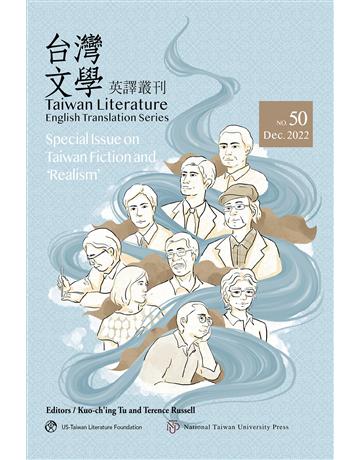
After a quarter of a century of hard work, our Series has finally arrived at its fiftieth issue. We owe gratitude to so many like-minded scholars and translators of Taiwan literature for their support and collaboration. Here we would like to first thank our guest editor for this issue, Professor Li-hsuan Chang, for her scholarly contributions, her cooperation in the conception and compilation of the issue, and for her selection of representative works. She has also provided short biographies of the authors and publication information, as well as soliciting the permission of the authors for the English translation and publication of their works. Professor Terence Russell, who coordinated with the translators, and Fred Edwards, our English language copy editor, worked together on the upstream tasks of editing the translated texts and doing the initial formatting of the manuscript. Yen Chia-yun of the National Taiwan University Press lent her expert assistance in downstream tasks such as taking charge of the cover design, collating the manuscript, and managing the printing process. The creative conceptualization of our cover design evokes the theme of this special issue: the images of a group of Taiwanese writers emerge and are borne swiftly forward in the long river of Taiwan literature, converging in a strong torrent of “Realism” that has run across one century. All these individuals have done their utmost in the pursuit of the highest standards of publication quality. Everyone has worked together with the shared objectives of contributing to the continued publication of the Series. For this we owe our deepest and most sincere gratitude.
推薦序
「台灣文學與『寫實主義』小說專輯」卷頭語
杜國清(美國聖塔芭芭拉加州大學東亞語言文化研究系教授)
《台灣文學英譯叢刊》自1996年創刊以來,以台灣主體性為核心的編輯方向,經過二十多年的努力,這一導向隨著台灣社會歷史的發展,更加明顯。這一編輯導向及其理論核心,基本上是葉石濤的文學史觀的呈現和實踐,也呼應本叢刊開宗明義所揭示的出版宗旨,在於促進國際間對台灣文學的發展和動向能有比較切實的認識,進而加?從國際的視野對台灣文學的研究。隨著今後台灣社會和政治情勢的發展,台灣的主體性將會越趨明顯。選譯的作品能夠呈現台灣文學的主體性,表現出台灣這塊土地及其人民、社會、歷史和文化特色,才能在國際上以其特殊屬性獲得肯定和賞識。這一觀點呈現在擬定主題、選文翻譯、以及英文編輯上,成?本《叢刊》一貫的特殊風格。
近年來,台灣研究在歐美學術界,由於台灣教育部的積極贊助,幾乎可以?是遍地開花,紛紛設立台灣研究中心,大力推展台灣研究,所展現的是多元文化的視角,和跨學科跨文化的國際視野,只要跟台灣沾上邊的任何研究議題,都可能在研討會上獲得發表的機會。就橫向發展而言,研究的觸角,不斷伸向日治時期與東亞殖民地、東亞文化傳統的連結,台灣文學與世華文學、世界文學的連結,原住民與世界少數民族的連結,以及台灣的開放社會與世界潮流的酷兒文化的連結。就縱向探討而言,研究的觸角伸向歷史文化、族群發展、以及傳統與現代和後現代的比較探索。
至於歷史意識與文化傳統而言,克羅齊(Benedetto Croce, 1866–1952)所謂「一切歷史都是當代史」(All history is contemporary history)的觀點,?調歷史的當代性,而與艾略特所?的「歷史就是現在」(History is now),可?異曲同工。艾略特(T.S. Eliot,1888–1965)?調歷史意識的同時性:「時間現在與時間過去,二者或許存在於時間未來,而時間未來包含在時間過去中。」(Time present and time past / Are both perhaps present in time future, / And time future contained in time past.),或者更具體地說,「傳統含有歷史的意識,認識到過去不僅具有過去性,同時也具有現在性。」(The historical sense involves a perception, not only of the pastness of the past, but of its presence)。換句話?,歷史意識使一個作家同時具有傳統性和現代性,成熟的台灣作家也不例外。台灣研究的歷史縱深,亦即過去曾經發生過的一切,只存在於現代人思索的世界中,有許多值得進一步探索的地方。因此,本專輯?磚引玉,初步考察「寫實主義」與台灣小?的建構與流變,對文學史的回顧和當代觀點的歷史詮釋,具有特別重大的意義。隨著國際局勢在東亞地區的丕變,台灣研究已形成一門顯學,方興未艾,樂觀其成。
基於這一認知,我們將這一集的主題擬定為〈台灣文學與「寫實主義」小?〉,特請台大台文所張俐璇教授擔任客座編輯,負責選擇作品和撰寫導論,探討台灣文學發展史上一個重要的思潮底流。張教授的學位論文,《建構與流變:「寫實主義」與臺灣小?生產》(國立成功大學,2014),從自然主義、現實主義、寫實主義、現代主義、到後現代主義,由理論思潮的變遷和文學批評的建構,看近百年來台灣小?的發展,可以?是師承葉石濤的核心文學史觀:「沒有土地,哪有文學」的寫實主義精神。四百多頁的博論專著,在這一專輯的〈導論〉中,只能針對「寫實主義」與台灣小?生產以一頁的篇幅,掛一漏萬,加以點題?明台灣「寫實主義」小?的主要特徵。
一般而言,台灣人作家希望建立自己的文學,自日治時代起,台灣鄉土文學的使命,有如使徒背負的十字架,前仆後繼,一直到現在。這也是葉石濤當初寫《台灣文學史綱》的意圖。回顧台灣新文學的發展史,主要潮流的演變,來自西方的影響,其中最重要的是意識形態主導的現實主義(Realism)和倡導反傳統的現代主義(Modernism)。台灣本土主義(Nativism)標榜以土地為依歸的寫實立場,便在這兩大西方思潮抗衡的隙縫中,應運而出,此起彼落,使台灣文學思潮的流變,形成「三?督」的局面。
一如葉石濤在〈世界文學的寫實主義與台灣新文學的寫實主義〉(2000)一文中所洞察到的,日治時期台灣作家的創作方式,都是寫實主義的,也是現代主義的,兩者都是舶來品,具有雙重的意義:前者面對異民族的殖民統治,採取反抗的基本立場是現實主義的原則,後者面對與殖民者共謀的封建體制,採取曲折迂迴的諷喻方式是現代主義批判現實的表現技巧。在這樣的殖民地社會情境下,兩者不是截然對立,而是互相滲透、調適、融合的,以達到反抗和變革的訴求和目的。因此,現實主義和現代主義的結合所激發的台灣本土主義,可以?是建構台灣新文學傳統的砥柱,以期實現建立具有自主性(originality)的文學願景,最終完成台灣作家作?使徒的使命。
台灣新文學的發展,以追風的〈她要往何處去〉為濫觴,發表於1922年,至今剛好一百年。同年劃時代的現代主義作品有喬伊斯(James Joyce,1882–1941)的《尤利西斯》(Ulysses)和艾略特詩歌《荒原》(The Waste Land)。追風的小?是初試啼聲,另外兩位大師級的作品是公認的傑作,不可同日而語。台灣新文學發軔時,歐美現代主義發展已達到高峰,台灣必然受到影響,可見現代主義與現實主義,在台灣的演變是與時並進的。台灣文學今後的發展,必然沿著從鄉土文學到本土主義這一導向。亦即台灣作家在擁抱鄉土之餘,必須具有文化的自主性,迎向全球化和多元化的國際社會現實,同時在反傳統、認識傳統、回歸傳統的文學道上,扎根本土,以其藝術的獨創性,追求現代主義的創新精神和作品的古典價值。
台灣文學的本土主義,蘊含寫實主義和現代主義的胸懷和視野,這也是本叢刊過去出版的專輯(39集到44集)也包括現代主義作家的理由,而在《台灣文學與「寫實主義」小?》這一專輯中,代表當代的三篇小?,賴香吟的〈島〉、明毓屏的〈雪的台北一九?一〉和黃崇凱的〈F虛構〉,都是立足於台灣本土、超越時空的局限、追求普世共同的文學價值、展現現代主義創作技巧和藝術構思的例證,也是本叢刊這一文學史觀和理念的實踐。
在這一專輯的〈導言〉中,張教授將九篇小?平均分成三個階段:日治時期(1922–1945)、戰後(1945–1991)和當代(1992–),且對作品的創作背景和選錄的考量,一一加以?明。要而言之,所選譯的九篇「寫實主義」小?,題材涵蓋面廣,各以不同的歷史背景,寫實地反映出社會現實,包括清末台灣割讓給日本時帶來的文化衝擊和認同困境,對纏足封建文化的批判,女性意識的覺醒,反殖民統治的抗日活動,殖民地台灣的日常生活,台灣話的語言認同感,斂財欺神金錢支配一切的社會風氣等。由於受到篇幅的限制,這一專輯雖然沒有選入直接涉及白色恐怖的小?,卻也包括解嚴以後,台灣開放社會的新移民融合的「寫實主義」後現代作品。
在所選的九篇作品中,有兩篇原文是日文,亦即:追風的〈她要往何處去〉和呂赫若的〈山川草木〉。英譯是根據鍾肇政和林至潔的中文翻譯,兩者的譯筆都相當忠實可靠。台灣新文學早期的作品,中文不甚流暢,增加翻譯上的難度,譯者都盡了最大的努力,值得肯定。關於吳濁流和呂赫若的作品,本《叢刊》15集(2004)和34集(2014)曾分別加以譯介,有興趣的讀者可以參考。關於譯者,除了經常給與協助的陶忘機教授和黃瑛姿之外,自上一集起有幾位生力軍加入翻譯團隊,繼續?本集《叢刊》翻譯,我們非常歡迎和感謝。
經過四分之一世紀的努力,《叢刊》終於出版了50集,不能不感謝許多志同道合的台灣文學學者和翻譯者的協助和合作。首先是客座編輯張俐璇教授的學術貢獻,配合這一專輯的主題,選擇具有代表性的作品,提供作者小傳和相關的出版資訊,徵求作者授權英譯轉載作品等編輯作業。其次是羅德仁教授聯繫譯者,並和專業英文編輯Fred Edwards共同審定譯稿,擬定初步排版等上游作業。臺大出版中心編輯部嚴嘉雲的專業協作,負責封面設計、校對定稿、印刷製作的下游作業、莫不盡心盡力,追求完美的出版專業水平。關於封面設計,美編富有創意的構思,在於呈現這一專輯的主題:一群台灣作家的形象,在台灣新文學的長河中湧現奔騰,匯成「寫實主義」跨一世紀的時代洪流。大家同心協力、對《叢刊》繼續出版的付出、支持和合作,謹致最大的謝意。
目錄
Foreword to the Special Issue on Taiwan Fiction and ‘Realism’ /Kuo-ch’ing Tu
「台灣文學與『寫實主義』小說專輯」卷頭語/杜國清
One Hundred Years of Apostles, Pathways and Objectives:Introduction to the “Special Issue on Taiwan Fiction and‘Realism’”/Li-hsuan Chang
百年使徒/途/圖──「台灣文學與『寫實主義』小說專輯」導言/張俐璇
Short Stories
Where Will She Go—For My Suffering Sisters 她要往何處去──給苦惱的姐妹們/Chui Feng
The Ducks 鴨母/Chang Shen-chieh
The Mountains, The Rivers, The Grass, and The Trees 山川草木/Lu Ho-jo
The Puppeteers Behind the Scenes 幕後的支配者/Wu Cho-liu
Discussing Art with Ah Li by Letter 在信中與阿笠談美術/Hsieh Li-fa
Blind Spot 死角/Tzeng Ching-wen
Island 島/Lai Hsiang-yin
Snowy Taipei: 1901 雪的台北一九?一/Ming Yu-ping
F for Fiction F虛構/Huang Chong-kai
About the Translators
About the Editors
About Subscription
|


 您現在的位置:
 電子書綜合教學

